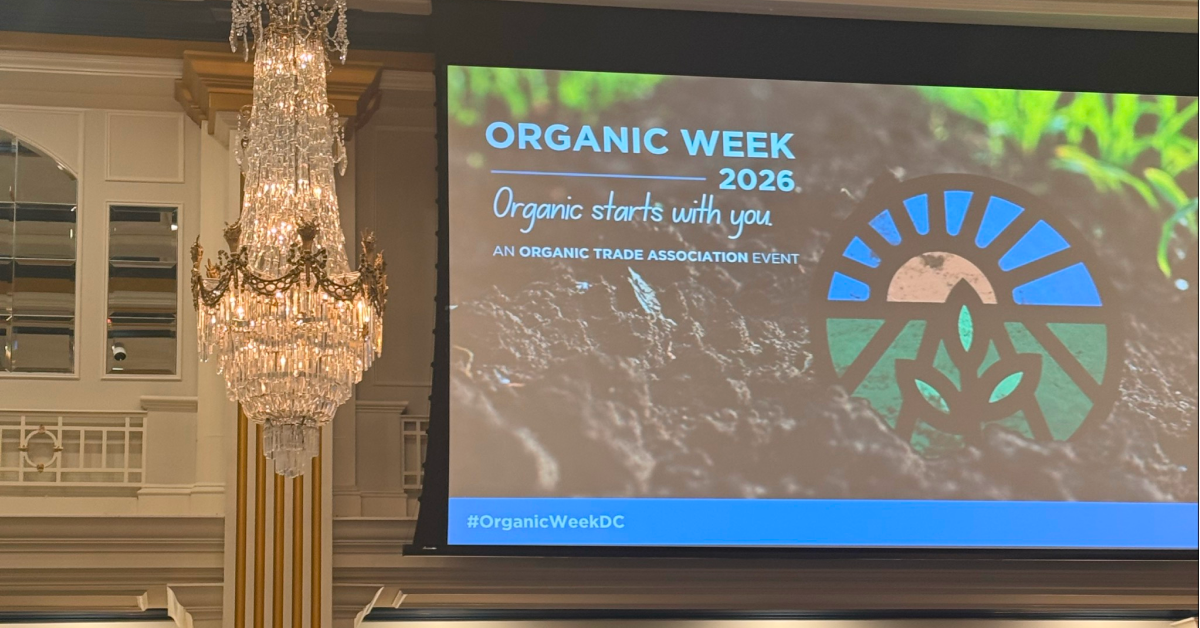
Last week, I joined leaders from across the organic value chain in Washington, D.C. for Organic Week. The official theme was Organic Starts With You, but if I had to summarize the dominant message coming out of the conference in a single sentence, it would be this:
The future growth of organic depends on building a stronger domestic supply chain.
That message surfaced everywhere. Whether it was the fireside conversation between Whole Foods leaders, discussions with farmers and processors, or policy conversations with lawmakers, there was remarkable alignment around one idea: if organic demand continues to grow, American farmers need to participate in that growth.
For us, that's not a new idea. It's been the foundation of PURIS for nearly 40 years.
Long before "supply chain resiliency" became a business buzzword, our family was investing in seed genetics, working directly with farmers, and building processing infrastructure close to where crops are grown. We've always believed that farmers should capture more of the value they help create. When organic demand grows, American farmers should grow with it.
That's also why some of the biggest challenges facing organic growth deserve more attention.
One of those challenges is the continued reliance on imported organic ingredients. Imports are not inherently bad. In many cases, they play an important role in serving market demand. But when imported products undercut domestic production, they can erode value across the U.S. supply chain. And when fraudulent imports enter the market, they do something even more damaging: they erode consumer trust in the organic seal itself.
That is why enforcement matters.
A recent USDA National Organic Program enforcement action highlighted just how important that work is. Through coordinated efforts between the National Organic Program, Customs and Border Protection, and organic certifiers, more than 21 tons of falsely represented organic pea protein were prevented from entering the U.S. market. The shipment was denied entry, the exporter's certification was suspended, and additional oversight measures were implemented.
The story is worth reading because it demonstrates that protecting organic integrity requires constant vigilance. Organic farmers and businesses invest real resources to meet the standard. Fraud undermines fair competition and weakens consumer confidence. Strong enforcement protects both. See USDA’s summary of the case in Organic Insider: Oversight and Enforcement Update.
Organic Week also celebrated our growth and reinforced something the industry has known for years: we cannot communicate our way into growth if consumers don't understand what organic means.
OTA's consumer education efforts, including the The Seal Makes It Simple campaign, are focused on making organic easier to understand. That's the right approach. The organic community sometimes overcomplicates its own story. Most consumers aren't reading certification regulations before they buy groceries.
One message consistently resonates:
Organic food is grown without synthetic chemicals.
That isn't the entire organic story, but it is a clear and understandable starting point. Sometimes better communication means saying less, not more.
The policy discussions on Capitol Hill centered on many of the same themes, including support for the Domestic Organic Infrastructure Act and other Farm Bill priorities designed to strengthen domestic organic production and processing capacity. If we want more organic acreage in the United States, we need infrastructure, markets, financing, and processing capacity that support those acres.
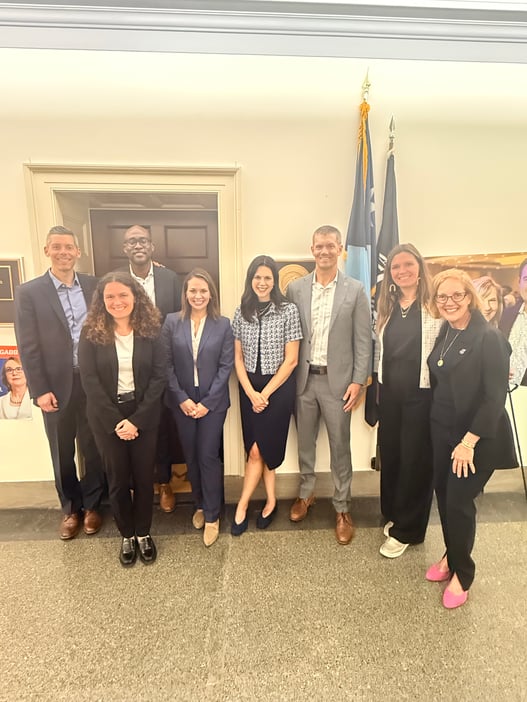
The timing of Advocacy Day provided a little unintended comedy. The Senate Agriculture Committee happened to be meeting the same day we were on the Hill, and it was one of the relatively few days since July that both the House and Senate were in session. The result was packed hallways, long lines outside congressional offices, and enough waiting to make even a complicated food supply chain seem efficient. But in some ways, it was a fitting reminder that progress is rarely fast, whether you're moving legislation or building food systems.
That experience also reinforced why civic engagement matters.
The Farm Bill will not write itself. Organic priorities will not advance themselves. Members of Congress hear from countless industries and constituencies every day. Showing up matters. Sharing perspectives matters. Helping policymakers understand the connection between domestic organic production, rural economic development, supply chain resilience, and consumer trust matters.
I left Washington encouraged.
Not because every challenge has been solved. Far from it.
I left encouraged because there is growing alignment across the organic sector. Retailers want reliable supply. Brands want growth. Farmers want opportunity. The question is whether we will build the domestic supply chain needed to meet that demand while preserving the integrity that makes organic meaningful in the first place.
For those of us who have spent decades investing in American farmers, seed innovation, and processing infrastructure, that's a future worth building.
Learn more about PURIS' commitment to organic agriculture at PURIS Organic Ingredients.