While the recent conflict in the Middle East is grabbing headlines, we want to point out that this crisis comes at a time when the domestic freight market conditions were already driving record-breaking increases. Though cost increases are never welcome, it’s important to understand that these changes reflect broader structural shifts across the logistics market, not just isolated pricing decisions.
Below is a clear breakdown of what’s happening and why.
A New Energy Shock Is Accelerating Freight Inflation
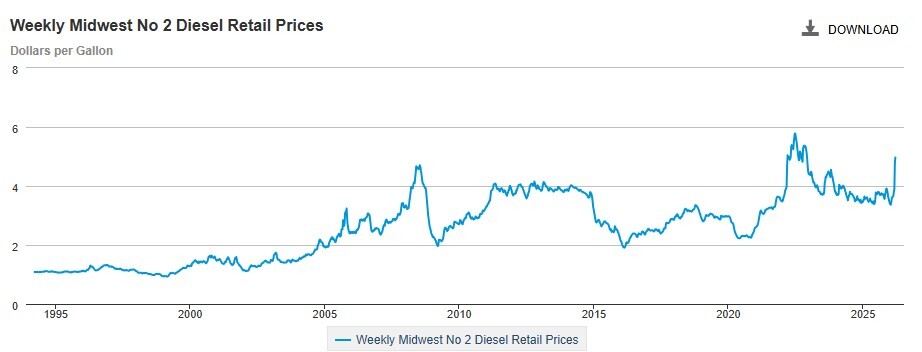
Energy markets have become increasingly volatile in 2026, driven by geopolitical tensions, supply uncertainty, and disruptions to key global shipping lanes. Diesel fuel prices have moved sharply higher in short periods of time, creating immediate cost pressure across all transportation modes. As the Strait of Hormuz stays closed, expect the energy markets to firm the longer the conflict goes on, and expect that regional diesel prices will climb with it. Below, you can see the recent spike caused by the Middle East conflict, pushing Midwest diesel prices up to levels we have not seen since the invasion of Ukraine drove energy markets to new highs.
For carriers, fuel is not just a line item; it is a daily cash expense with limited hedging flexibility, particularly in truckload markets. As a result:
- Fuel surcharges are adjusting more frequently and less predictably
- Carrier operating margins are tightening in real time
- Spot rates are reacting faster to energy swings than in prior cycles
This has created a more reactive freight market, where pricing moves quickly in response to external shocks. However, it’s critical to understand: energy is amplifying an already tight system.
Record‑High Non‑Fuel Operating Costs
New 2026 findings from the American Transportation Research Institute (ATRI) show that while fuel prices may fluctuate, non‑fuel trucking costs remain at historically high levels. Equipment payments, insurance, maintenance, technology investments, and compliance costs continue to rise, leaving carriers with limited ability to absorb expenses without rate adjustments. (Trucking Research)
Ongoing Labor and Driver Availability Challenges
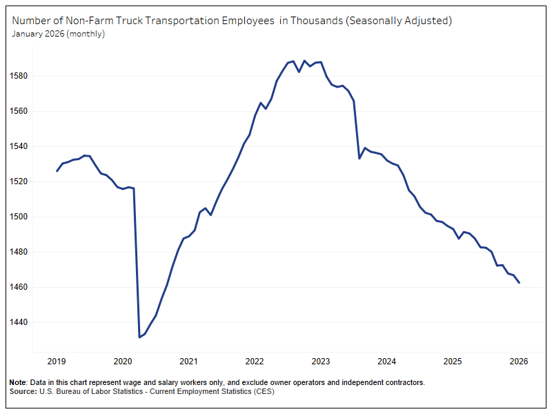
The news that is likely well below your radar is the massive driver shortage. ATRI and industry labor data show that an aging workforce, recruiting challenges, and higher benefit and retention costs continue to strain carrier operations. Even as wage growth stabilizes, total labor costs remain elevated, contributing directly to higher transportation pricing. (American Transportation Research Institute)
Tight Capacity and Network Constraints
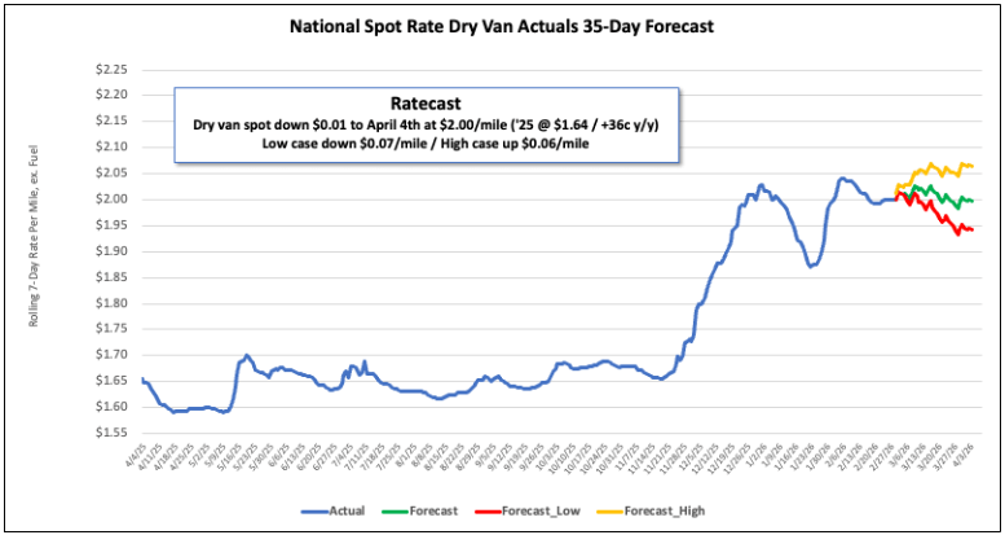
According to the Bureau of Transportation Statistics’ February 2026 Supply Chain Indicators, capacity remains constrained across multiple freight modes. Congestion, reduced equipment productivity, and labor tightness continue to limit available capacity, which naturally increases competition for trucks and drives rates higher. Below you can see how the National Spot Rate Dry Van Actuals has increased well before the recent energy market shock. This highlights the point that while the energy market shock is real, it merely lit the match on an already well-made tinderbox.
Why These Increases Are Industry‑Wide
These cost pressures are not limited to one provider or region. Federal data and 2026 industry research show that transportation providers across the U.S. are operating in a high‑cost environment with limited excess capacity. As a result, rate increases are being seen consistently across the logistics industry, regardless of carrier or mode. See below for regional rates, and all regions, as well as the National average, are trending well above a pandemic-adjusted 5-year average. It's important to note, that the below price levels have not moved much since the rise in diesel prices, and are likely to be moving higher in short order.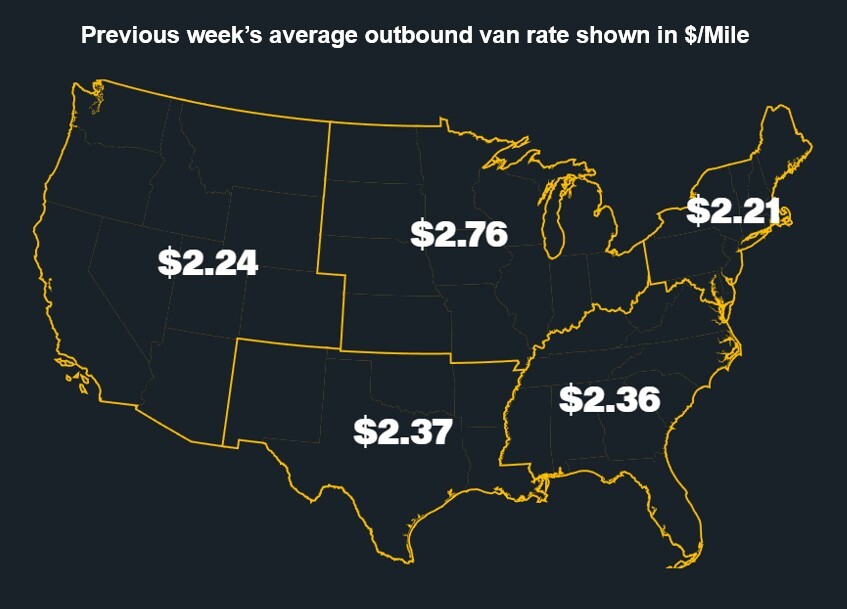
What This Means for Our Customers
We understand that rising transportation costs affect your business planning and budgets. While we cannot control market conditions or human and pet food supply chains, we are committed to:
- Transparently communicating market changes
- Working with reliable carrier partners to secure capacity
- Identifying efficiencies and optimization opportunities where possible
- Helping customers plan effectively in today’s transportation environment
Looking Ahead
Industry indicators suggest transportation costs in 2026 are stabilizing at a higher baseline than pre‑pandemic levels, shaped by sustained operating costs, labor constraints, and ongoing network inefficiencies. These conditions are expected to remain a defining feature of the logistics market moving forward. Coupled with the ongoing cost of a global energy shock, leaders need to be leaning into the details on their freight book, manage the risks, and finding the right partners to help minimize the costs. Solutions need to be flexible, resilient, and multi modal for supply chain's to have success in this market full of volatility.