July is a critical window for both soybeans and yellow field peas as crops enter reproductive stages and yield potential is determined. Time spent in the field now helps protect this year’s crop and improves decision-making for next season.
1. Disease Pressure and Canopy Distribution
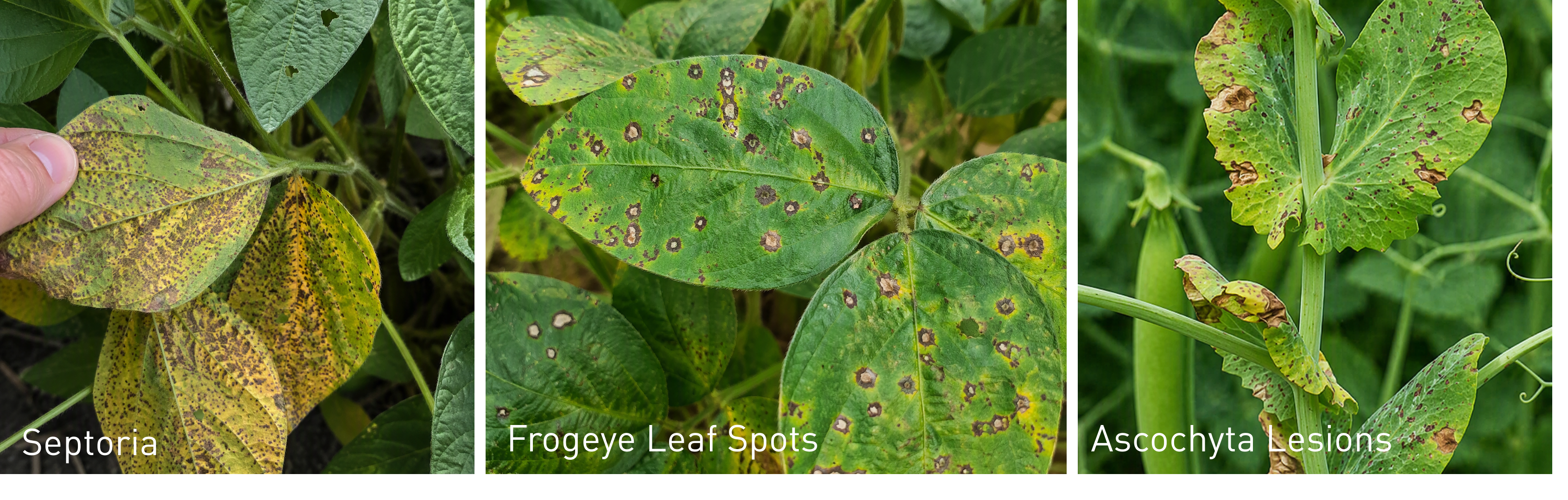
Disease should be one of the first things you evaluate in a July field walk, but just as important as presence is where it is within the canopy and how it is progressing.
- Soybeans: Septoria brown spot, frogeye leaf spot, white mold risk
- Field peas: Ascochyta blight, downy mildew
Some diseases, like Septoria, are often more noticeable in the lower canopy, while others, such as frogeye leaf spot, can appear higher in the canopy earlier. Not all diseases follow the same progression pattern, so it is important to evaluate each field individually.
What to look for:
- Location of symptoms (lower, mid, or upper canopy)
- Spread and severity across the field
- Areas with higher humidity or thicker canopy
Why it matters:
Disease impact is closely tied to timing and canopy movement. In peas, infections that begin around flowering and early pod set can be the most damaging if they continue to develop.
Even without in-season treatment, these observations help guide future variety selection, rotation, and management strategies.
2. Weed Escapes and Program Performance
By July, herbicide programs have largely played out. This is the time to evaluate how well they performed.
What to look for:
- Escapes of species like waterhemp, kochia, or ragweed
- Patchy versus widespread pressure
- New or unexpected weed species
Escapes can indicate issues with timing, coverage, or herbicide resistance and are among the clearest signals to adjust programs next season.
Even low populations can return significant amounts of seed to the soil, increasing the seed bank for the next season.
Why it matters:
This is your best opportunity to:
- Identify resistance risks
- Improve pre-emergence residual programs
- Adjust application timing or layering strategies
3. Crop Stage and Reproductive Progress
Both crops are in key reproductive stages:
- Soybeans: R1 to R3 (flowering through early pod set)
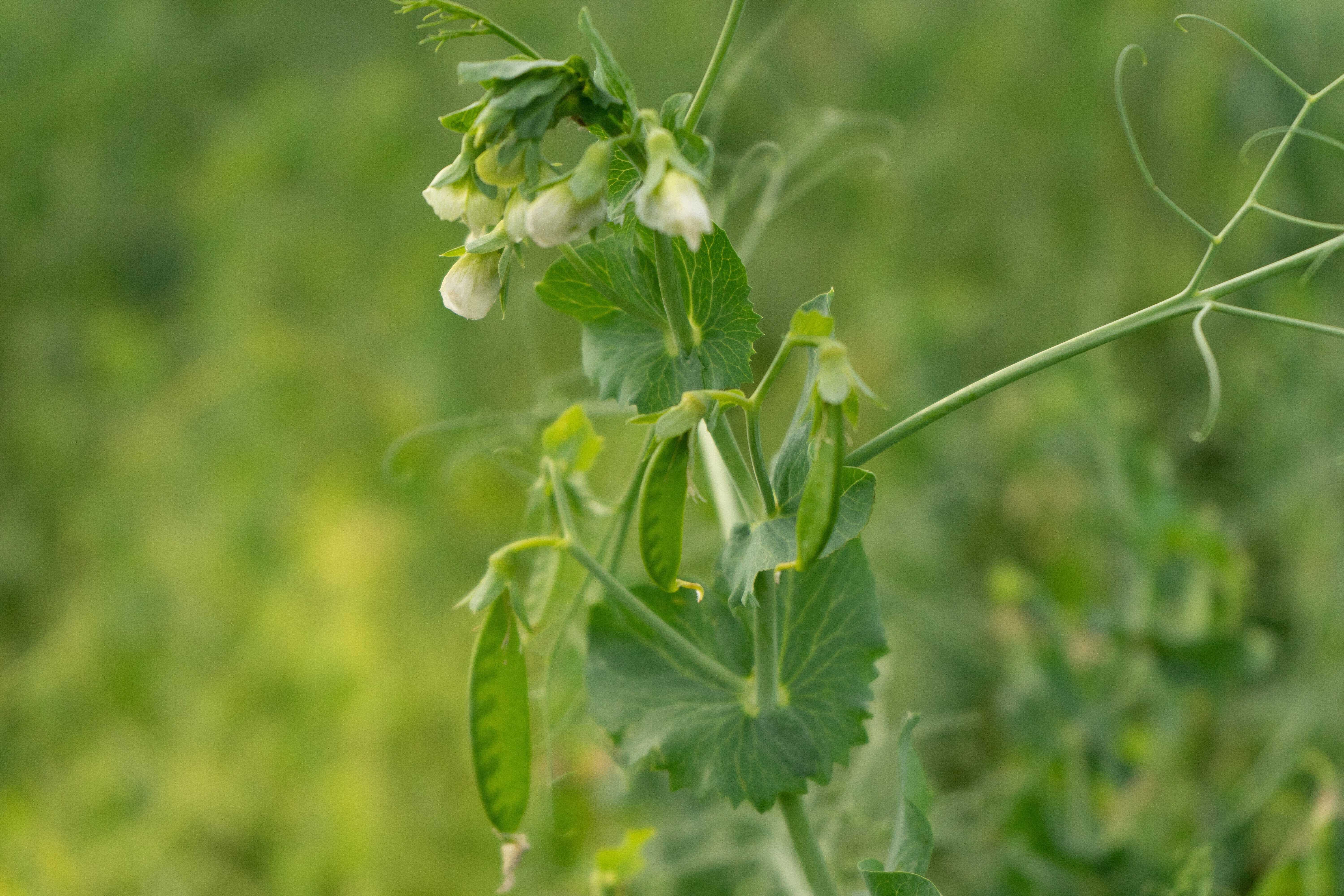
- Field peas: flowering into pod set
At R3 in soybeans, pod development has begun and the plant becomes increasingly sensitive to stress that can impact yield.
What to look for:
- Uniformity across the field
- Delayed development in stress-prone areas (IDC, compaction, wet spots)
- Flowering intensity and early pod formation
Why it matters:
Uneven staging often explains yield variability and helps diagnose underlying soil or management issues to address moving forward.
4. Insect Pressure and Population Trends
Insect presence is common in July, but the focus should be on population trends, reproduction potential, and actual crop impact.
- Soybeans: Aphids, defoliators
- Peas: Aphids, grasshoppers
Aphids deserve extra attention because populations can increase rapidly under favorable conditions. University research shows that treatment is typically considered when aphid populations exceed about 250 per plant and are increasing, but population trends are also important.
What to look for:
- Signs of feeding damage (leaf loss, pod feeding)
- Increasing populations
- Distribution across the plant
Why it matters:
Balancing insect pressure with crop tolerance is key. Close monitoring allows timely decisions while avoiding unnecessary applications.
5. Pod Set and Yield Component Checks
This is where yield is being built.
- Soybeans: plants per acre, pods per plant, and seeds per pod
- Peas: pods per plant, seeds per pod
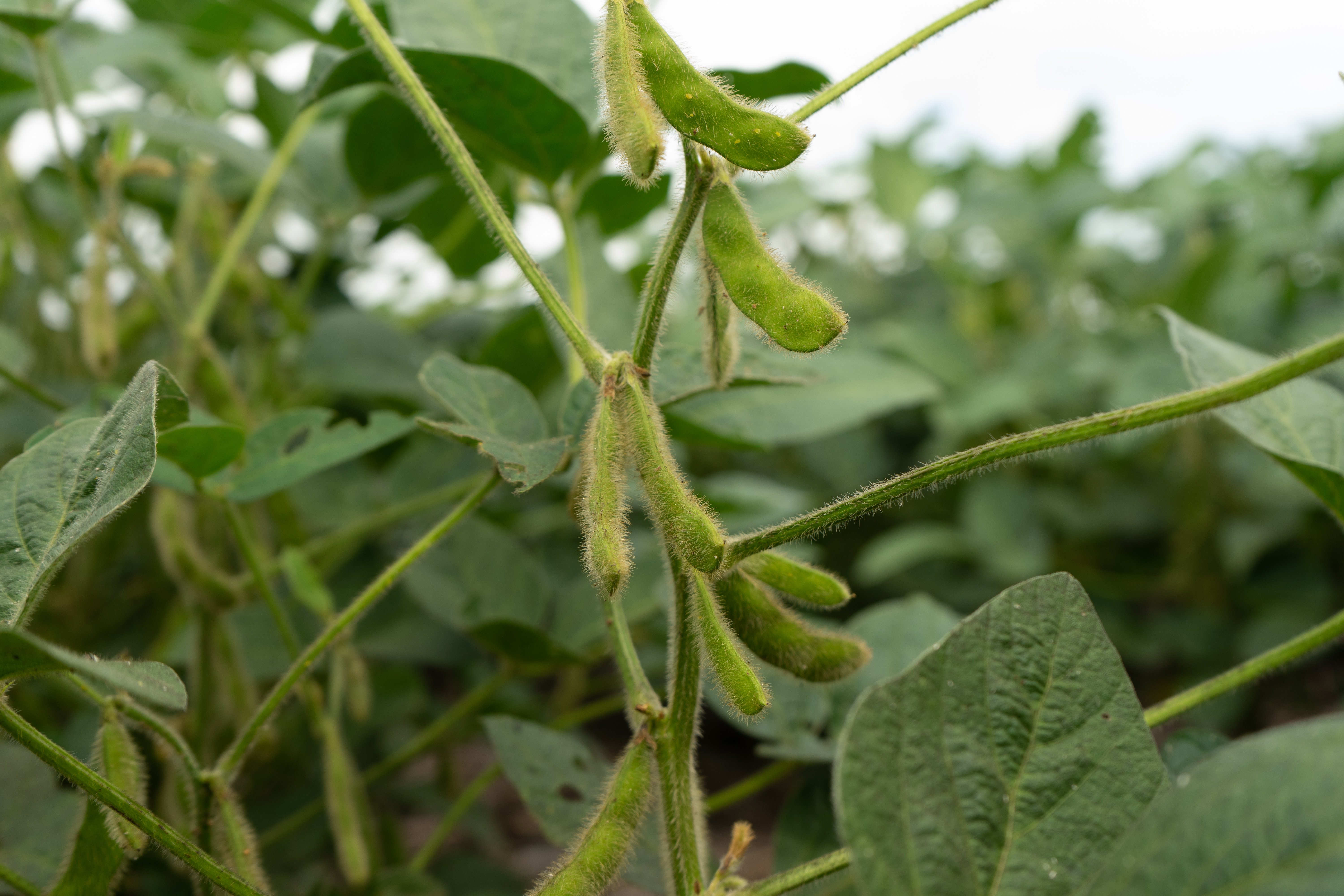
Soybeans naturally abort a significant portion of flowers, particularly under stress during early reproductive stages.
In peas, pods per plant and seeds per pod are the best ways to determine yield potential
What to look for:
- Pod initiation across nodes
- Flower or pod abortion
- Differences between strong and weak areas of the field
Why it matters:
These observations help explain yield potential and identify when and where stress is occurring, providing insight for future management decisions.
A July field walk is one of the most valuable passes you will make all season. It allows you to:
- Protect yield during a critical reproductive window
- Evaluate what is working and what is not
- Make better, more informed decisions for next year
The more intentional your scouting is now, the more value you will get both this season and beyond.