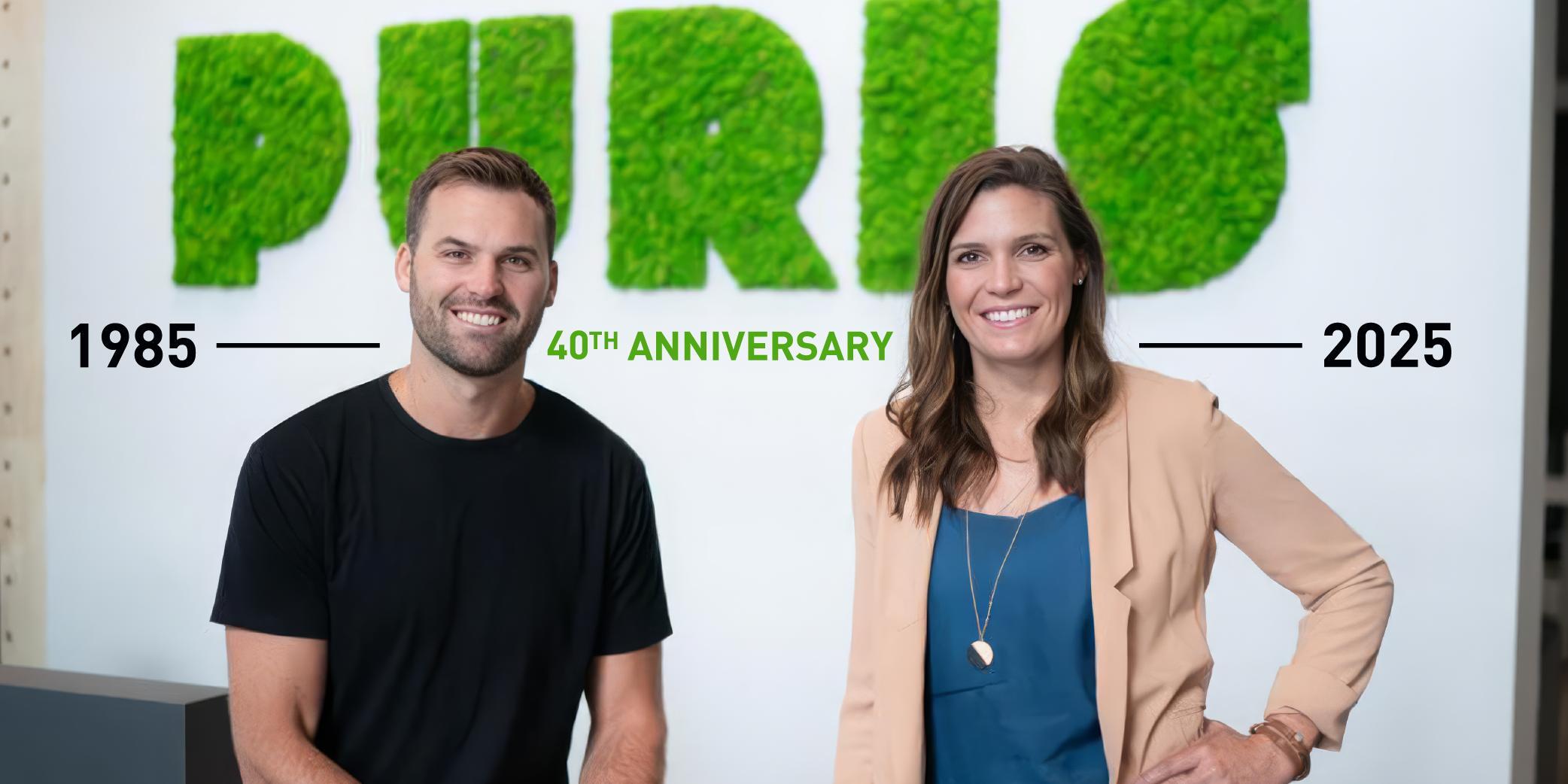
As PURIS celebrates its 40th anniversary, its story is inseparable from the Lorenzen family and from the next generation now leading the company forward. In this conversation, Tyler Lorenzen, CEO of PURIS Proteins, and Nicole Atchison, CEO of PURIS Holdings, reflect on growing up inside a business, taking very different paths away from it, and ultimately coming back together to shape PURIS into what it is today.
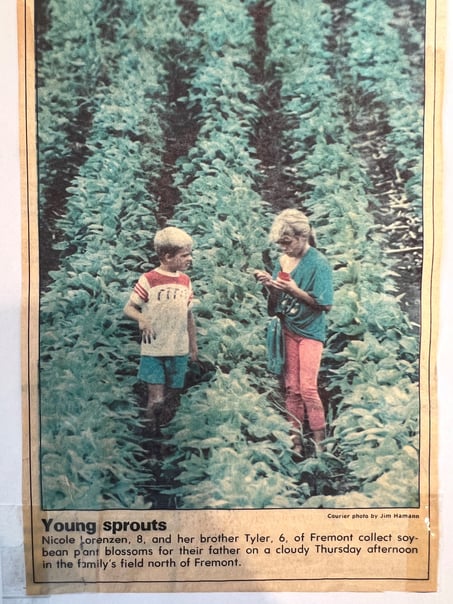
Q: You both grew up on a genetics farm, not a traditional farm, as most people imagine. Your father, Jerry, talked about you both helping with seeds and running through the fields. What was that really like as kids, and how did it shape who you are today?
Nicole Atchison: The first thing I always say is that we never thought of ourselves as living on a farm. It was always a business. Even when we were in the field, it was about the business we were building. That wasn’t intentional; it was just how it was talked about in our house.
Our first field was actually our garden. We lived in the country, so it was large enough to start crossing plants there. Later, we worked on small sections of our grandparents’ farm, and those fields changed over time. But the focus was always on the seeds we were building and our role in that.
We spent a lot of time in the field. Hoeing weeds, crossing soybeans, planting, harvesting, whatever needed to be done, in any weather, at any time of year. If we weren’t in school, we were probably in the field or preparing to be there. It was hard work, and it wasn’t always fun.
What mattered was that our parents made sure we understood why we were doing it. They instilled a sense of ownership from a very early age. We were never just laborers. We were part of the business. Even when we were eight years old, we felt like we were building something for the future, our future, and our kids’ future. That mindset has stayed with me more than anything.
Tyler Lorenzen: I agree with everything Nicole said. The only thing I’d add is that even though it was hard work, we found ways to have a lot of fun. Jerry was always good at that.
One of our jobs was recruiting friends and family to help, so we weren’t usually alone in the field. Our friends worked with us from when we were really young all the way into college. In high school and college, we’d work out before work, work all day, and work out after!
Yes, it was work, but it was also community. People learned how to work hard and how to push through something uncomfortable. Some of those early helpers became some of our earliest team members later on. There are so many stories. Entire football teams picking corn together. Singing songs between shifts. It sounds fake when you tell people, but it was real.
When you’re a kid, and you’re asked to do something hard, and you do it, you gain confidence. You realize things aren’t as impossible as they might seem.
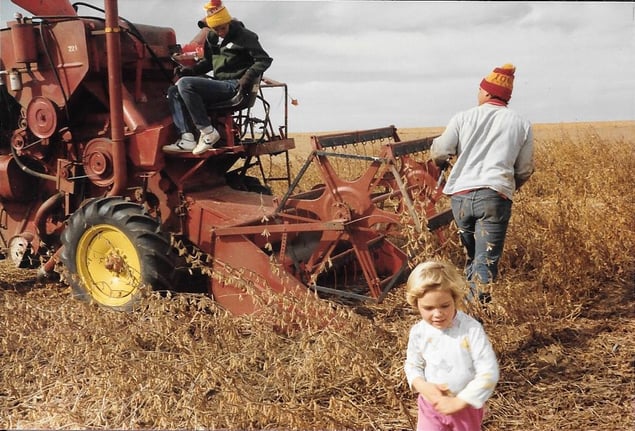
Nicole Atchison with Jerry and Renee Lorenzen
Q: Is there a specific memory from those early days that really defines that time for you?
Nicole: What’s wild to me is that we’re running the business today that our dad said we would run almost 40 years ago.
I remember standing in the field with teenagers, our friends, crossing soybeans, and Jerry telling us we were building a food company. It felt crazy at the time. Almost dismissive. Like, what is he talking about?
But he was adamant. He talked about protein independence, designing seeds so farmers could be successful, and turning those crops into food. It took almost 40 years for him to be proven right.
The foresight and conviction he had, and that our mom supported, is incredible. For decades, people thought we were doing something strange. We were ridiculed long before what we were doing became accepted or “on trend.” I honestly don’t know if I could have handled that kind of persistence, but they did.
Q: Tyler, many people know you from your time in the NFL. Can you talk about that transition, going from professional football to joining PURIS, and how that experience prepared you in unexpected ways?
Tyler: Growing up, chasing a dream was always encouraged. My dream was to play professional football, specifically as a quarterback. Coming from a small town in Iowa, most people didn’t think that was realistic, but our parents never discouraged it. They taught us discipline and sacrifice. Dreaming was fine, but you had to be willing to do the work.
Football was my focus for most of my life. I studied international business management with the idea that someday, after a successful football career, I’d help grow PURIS.
That’s not how it played out.
NFL stands for “Not For Long,” for me. I like to say I was fired from my dream job four times. Each time I got cut, I came home and tried to figure out what was next. One year, I was on the Saints’ practice squad when we won the Super Bowl, which was an incredible experience. Other times, I was stacking bags on night shifts in Minneapolis, living with Nicole and Jordan.
Eventually, I knew it was over. I wasn’t planning on joining PURIS. I didn’t even know what I was going to do. Around that time, Kushal Chandak joined the company, and he and I were the same age. Then Jerry decided to buy a soy protein plant in Turtle Lake, Wisconsin. Suddenly, Kush and I were told to figure it out.
I was responsible for the commercial side. I learned fast. All the lessons from sports, grit, discipline, and teamwork, translated. Business is a different sport, but the impact is bigger. You’re not just playing a game. You’re building something that matters.
Nicole: One thing Tyler doesn’t always mention is that his time in professional sports made him the target customer for our early products. He didn’t need market research. He was the market. He understood performance nutrition intuitively, and that insight was critical in the early days when we didn’t have large teams or resources.
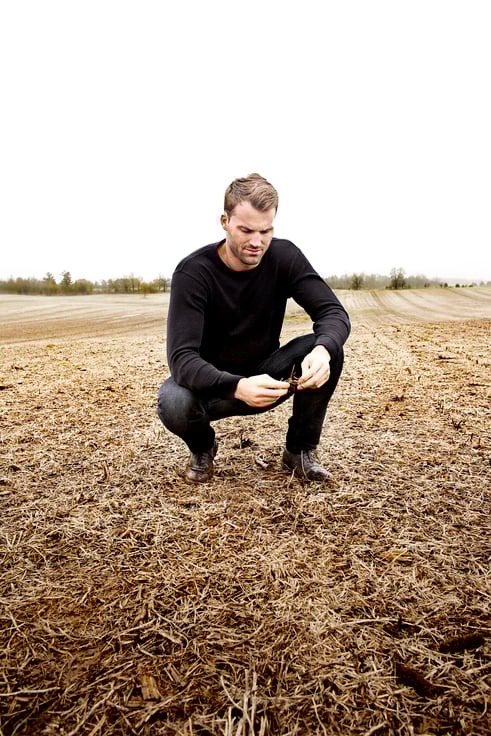
Tyler Lorenzen out on the field
Q: Nicole, your path was very different — PhD, medical devices, large corporations. Can you walk us through that journey?
Nicole: I very much fit the stereotype of the oldest daughter. School mattered to me. Since ninth grade, I have known I wanted to be an engineer, specifically, a biomedical engineer, because I want to help people live better lives through innovation.
I went to Iowa State, then moved to Minnesota for my PhD. I joined a large medical device company and quickly got exposure to acquisitions, FDA regulation, product launches, systems-building, all of it. I spent eight years bringing one product to market. Two weeks after FDA approval, the company was acquired again.
That was an inflection point. I had achieved my mission, but I started questioning whether we were solving problems that diet and exercise could have prevented in the first place. I wanted to make a broader impact.
Around that time, Tyler and Kush were building PURIS. Tyler had joked about me joining, but one weekend I decided — I’m going to jump ship. I surprised him. My first real role was HR. We didn’t have systems, policies, or infrastructure, so I brought what I could from my previous experience and adapted it.
What surprised me most was how transferable everything was. Regulation, systems, culture — agriculture and medical devices weren’t that different.
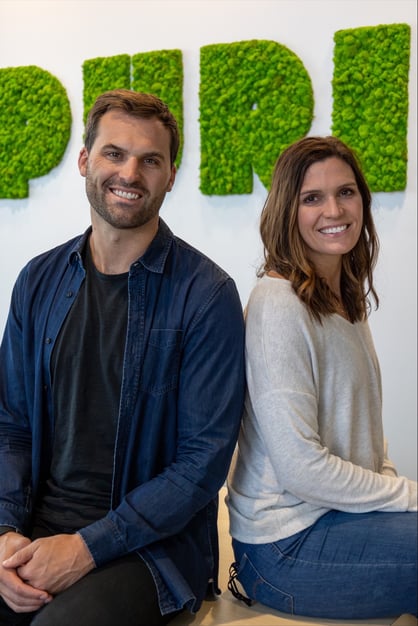
Tyler Lorenzen and Nicole Atchison
Q: You’re very different leaders. Tyler, you’re often described as a “captain.” Nicole, you’re an “analyzer.” How do those styles work together?
Nicole: We’re very different, and that can be challenging, but it’s also a strength. Tyler is incredibly gifted at vision and motivating people to go on that journey. I’m more focused on execution—mobilizing teams and building systems.
If we were one person, we’d be the ultimate CEO. But being separate lets us cover more ground. We can be in different rooms, carrying the same message, and that’s a huge advantage.
Tyler: Nicole is the yin to my yang. She challenges my ideas and keeps me grounded. Leadership can be isolating, and having someone you trust completely makes a huge difference.
Working with my sister is one of my favorite parts of the job. I know she has my back, which allows me to lean into what I’m uniquely good at. I hired my boss, and I’m glad I did.
Q: Tyler, you were instrumental in pushing PURIS toward pea protein. When did you realize that was the future?
Tyler: We started with soy protein, but it was a crowded market with a lot of headwinds. Pea protein kept coming up. I asked Kush if we could apply our technology to peas. Eventually, we had something that worked.
I remembered walking through pea fields with my dad years earlier when he told me peas would be a big deal for farmers someday. So we tested it. We showed him the applications, cream cheese, ice cream, and shakes. He tried them and said, “You’ve got something.”
We pivoted everything. Went all-in. When PURIS pea protein launched in 2014, the response was immediate. That’s when we found product-market fit, and from there, it was all about scaling.
Q: Nicole, as CEO of PURIS Holdings, you’ve been deeply involved in agriculture, sustainability, and policy. How do you see that role?
Nicole: As we scaled, we realized we couldn’t remain isolated. We needed to join the larger agriculture conversation, policy discussions, organic standards, and grower communities.
At first, I wasn’t sure our voice would matter. But it did, quickly. We realized we could lead, not just participate. PURIS became an example of sustainable food and agriculture at scale.
That work gives me fulfillment. Business can be a force for good, and we have a responsibility to show what’s possible.
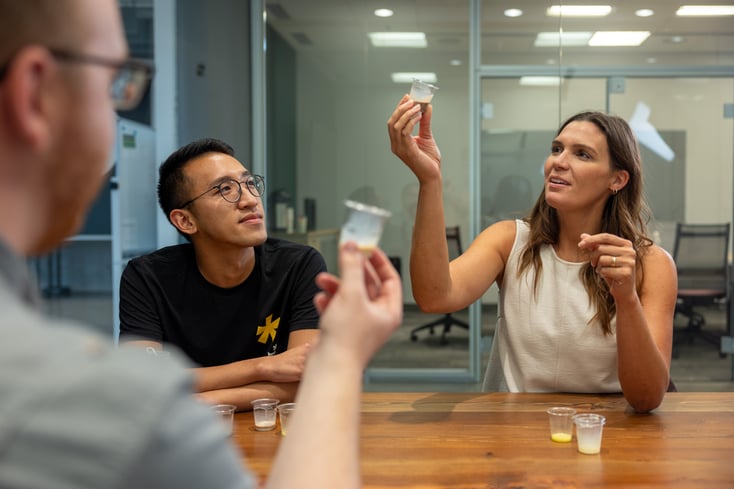
Nicole Atchison and Misen Luu testing PURIS Innovation
Q: As we look back on the last 40 years, the journey hasn’t been linear. There have been breakthroughs, but also real hardship. What are you most proud of when you reflect on that journey together?
Nicole: What I’m most proud of is our team.
Coming out of COVID and the drought, those were incredibly hard times for the industry and for PURIS. We made a very intentional decision to be transparent with our team about what was happening and how serious the challenges were.
What stood out to me was that people didn’t walk away. They leaned in. They chose to stay. That wasn’t easy. It would have been understandable for people to leave, but they believed in the mission and in what PURIS could be. They doubled down and helped us get through it.
Owning a business is one thing. You don’t really get a choice. But team members choose where they show up every day. Knowing that our team decided to stay through some of the most challenging moments is something I’m incredibly proud of. It says everything about who we are as a company.
Tyler: I completely agree.
I don’t know if there’s anything that truly surprises me anymore, because the work keeps evolving and it keeps getting more interesting. What I do know is that this is a business worth fighting for. It’s a vision worth fighting for.
We’re still early in the journey. The best is ahead of us.
Nicole: One thing that still surprises me is when people who aren’t connected to our immediate world know who PURIS is. For most of our history, that wasn’t the case. It was just our circle.
Now, running into people who recognize the name or understand what we do is still a little surreal. It’s a reminder that the work is resonating beyond our walls, and that’s meaningful.
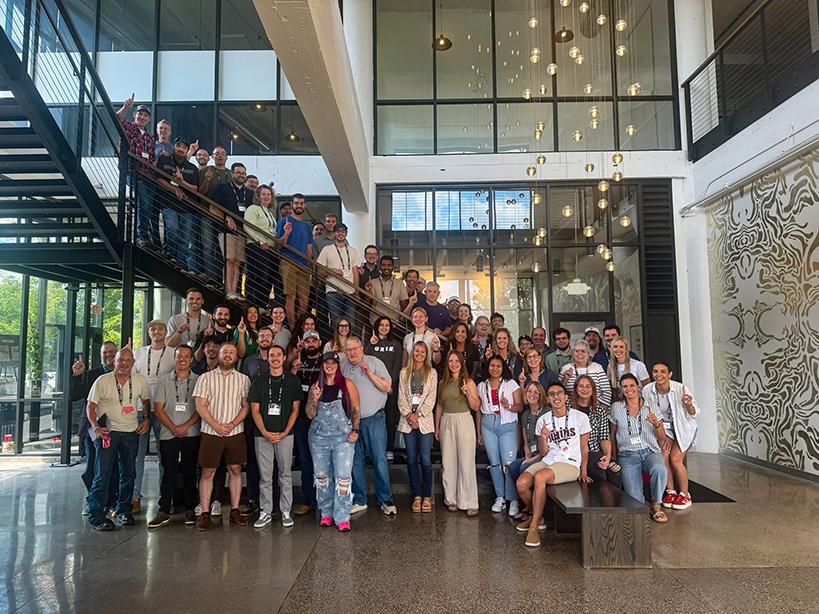
PURIS Team Photo from our 2025 Annual General Meeting
Forty years ago, PURIS began as an idea rooted in genetics, conviction, and a belief that agriculture could be done differently. Today, under the leadership of Tyler Lorenzen and Nicole Atchison, that belief continues to evolve. Built on grit, systems, and a shared sense of ownership, PURIS’s story is still being written, and the next chapter is only beginning.