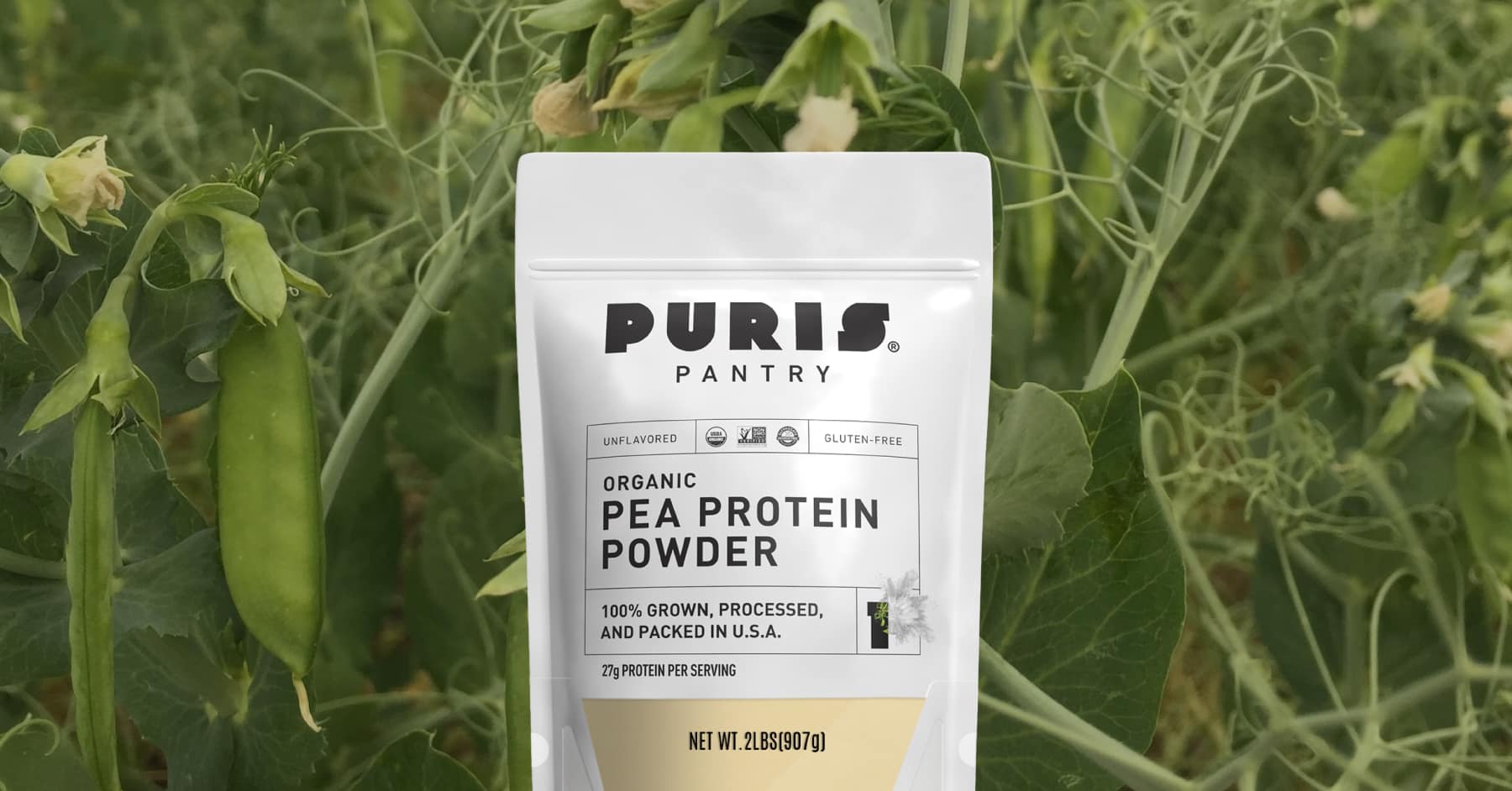
If you’re a product developer working on ready-to-mix (RTM) protein shakes, you’ve probably felt the pressure of California’s Proposition65. Heavy metals, especially lead, can derail an otherwise clean, high-protein formula. And while many consumers assume the issue lies with the protein, our journey proved otherwise.
This is the behind-the-scenes story of how we chased down flavor houses, cocoa suppliers, and labs to build RTMs that were delicious and compliant. It was long, tedious, and at times ridiculous, but it led to some big insights we wish we'd had from day one.
The Myth: “Protein =Prop 65 Problems”
Walk into any online forum, and you'll see it: “Plant proteins fail Prop 65 because... well... plants.” But when we actually started formulating our vanilla and chocolate RTMs, the protein wasn’t the problem at all.
In fact, our protein ingredients consistently tested well below targets needed for Prop 65 formulation, with batch‑level lead values in the ~0.006–0.008 ppm range and cadmium ~0.06–0.08 ppm in recent lots, numbers that comfortably support a 20–30 g serving without approaching Safe Harbor levels, thresholds set by California's Proposition 65.
So if the protein wasn’t causing failures… what was?
Surprising Culprit #1: Flavors
After sending out COA requests and follow-up emails, we started receiving responses from flavor suppliers. Some came back with heavy metal levels so high we thought the decimal was in the wrong place.
Others simply said:
“We don’t test for heavy metals in flavorings.”
For an RTM, where flavor load can be ~1–3% of the entire formula, this was a major wake‑up call. In our chocolate builds, the chocolate natural flavor contributed meaningfully to total lead and cadmium. Interestingly, our independent laboratory testing results still fell far short of the supplier’s written “spec,” which they admitted isn’t backed by any testing.
Our read: they don’t want to be held to a spec, so they put something artificially high on paper and leave it up to the brand to figure out the risk. Frustrating.
Non‑surprising Culprit #2: Cocoa Powders
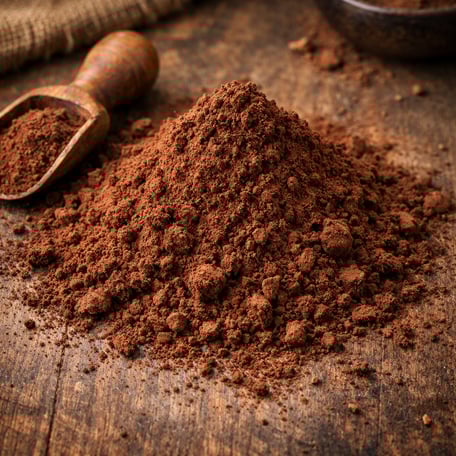
If you’re formulating chocolate anything, you already know cocoa is a predictable and chronic Prop 65 driver. Unlike flavors, where the shock comes from suppliers not testing, cocoa’s heavy metal burden is well‑documented and stems from agricultural and geographic realities.
This all traces back to a series of lawsuits brought by As You Sow, a consumer advocacy organization, against major chocolate companies. The core claim was simple: people were being exposed to lead and cadmium from cocoa‑based products without clear warnings.
Rather than fight this ingredient-by-ingredient, the companies and the court agreed to a Consent Judgment that set clear, standardized thresholds for when cocoa and chocolate products themselves must carry a Prop 65 warning. The goal was to reduce consumer confusion and give chocolate manufacturers a consistent playbook for labeling, not to establish safety standards or police ingredient specifications.
That Consent Judgment (Case No. CGC‑15‑548791) explicitly covers cocoa powder and cocoa solids, whether they are sold directly to consumers or used as ingredients. It was entered by the Superior Court of California on February 14, 2018, and remains the framework many large cocoa suppliers still reference today, including during opt‑in and implementation periods that extended into 2019.
For products with >95% cacao, settlement‑based materials, and opt‑in implementation guidance used by large cocoa suppliers, reference the following warning‑trigger concentrations:
- Lead: 0.22 ppm
- Cadmium: 0.96 ppm
These values are warning thresholds under Proposition 65—not health‑based limits—and exceeding them triggers a warning obligation on the finished cocoa or chocolate product. They do not provide protection for downstream brands that use cocoa powder as an ingredient in higher‑serving applications, such as RTM protein shakes.
Public settlement documentation - here.
We initially used the settlement figures in our calculations and later received results from routine supplier monitoring. However, when we sent retained cocoa powder samples for our own independent analysis, we found that:
- Some lots tested above the settlement‑referenced values our suppliers provided; and
- Individual results were well above the annual monitoring statements provided (in some cases, more than three standard deviations higher).
When we plugged the actual test results into our Prop 65 Heavy Metal Calculator, cocoa is one of the largest contributors to lead and cadmium totals, even though there is roughly 14× less cocoa than protein in the formula!
What this means for formulators
If your brand relies on cocoa powders:
- Always request current COAs, not settlement sheets.
- Assume each lot may vary meaningfully.
- Build your formula’s Prop 65model using measured data, not decade‑old agreements.
Predicting Heavy Metal Results
We use our Prop 65 Heavy Metal Calculator to predict compliance before we ever run a finished-product test.
The calculator is a screening and decision‑making tool, not the final answer. It allows us to:
- Identify which ingredients are driving risk (i.e., cocoa and chocolate flavor)
- Compare formulas side‑by‑side (vanilla vs. chocolate)
- Decide when a formula is likely to pass, close to the line, or needs reformulation
After entering our formulas and the best available data on heavy metal concentrations, the biggest takeaway was not the absolute numbers but the difference between the vanilla and chocolate formulas.
Vanilla vs. Chocolate Formulas - Prediction

Using conservative assumptions, the calculator predicted:
- Vanilla RTM lead exposure ≈ 0.2 µg/serving
- Chocolate RTM lead exposure≈ 0.48 µg/serving
That gap is entirely driven by cocoa powder and chocolate natural flavor, not protein. The only meaningful difference between the vanilla and chocolate formulas is the inclusion of cocoa powder and chocolate flavor; all other ingredients are the same.
Cocoa and chocolate flavor together contribute roughly 54% of the lead content, despite making up only about 9% of the total formula.
Both formulas were predicted to fall below the Prop 65 Safe Harbor limit of 0.5 µg/day for lead, but the chocolate formula sits much closer to the line.
For cadmium, the calculator predicted:
- Vanilla RTM cadmium exposure ≈ 2.0 µg/serving
- Chocolate RTM cadmium exposure ≈ 3.1 µg/serving
Again, both are under the 4.1µg/day Safe Harbor, but chocolate leaves far less margin for natural variability. Cocoa and chocolate flavor contributed roughly 36% of total cadmium exposure, despite representing only ~9% of the formula.
Even with a strong predictive model, finished‑product testing is still required. The calculator helps us understand what to test and why—it does not replace analytical confirmation.
Vanilla vs. Chocolate Formulas - Third‑Party Testing
After understanding our risk profile, we validated our assumptions through third‑party testing of the finished products. The results are below.
Formula |
Lead (ppm)
|
Lead (μg/serving)
|
Cadmium (ppm)
|
Cadmium (µg/serving)
|
Vanilla RTM |
< LOD |
0.18 |
0.085 |
2.2 |
Chocolate RTM |
0.017 |
0.48 |
0.127 |
3.6 |
Note on units: ppm = mg/kg = µg/g. Multiply ppm by serving grams to calculate µg/serving (e.g., 0.017 ppm × 28.1 g ≈ 0.48 µg lead/serving). LOD = Limit of Detection.
At first glance, the prediction model performed well. Lead was nearly spot‑on (with vanilla testing lower than predicted, as expected), and cadmium tracked closely as well. Both formulas met the Prop 65 Safe Harbor limits for lead and cadmium—something increasingly difficult to achieve.
Vanilla has a much larger cushion for natural variability, while chocolate behaves exactly as predicted: higher risk and less margin.
Why Vanilla Tests Lower Than Predicted
For results where lead was not detected (as in the vanilla RTM), we DID NOT use zero in our calculations. Instead, we conservatively set the Limit of Detection (LOD) to the input value.
In practice:
- The finished vanilla formula had no detectable lead above the LOD
- The calculator still assigns a small lead value to avoid underestimating exposure
- As a result, the predicted µg/serving for vanilla is intentionally higher than the true analytical result
This approach prevents false assumptions of compliance based on non‑detects, but it also means the calculator will over‑predict risk in very clean systems like vanilla.
Bottom Line
Across both formulas, protein did contribute trace amounts of lead and cadmium, but it was cocoa and chocolate flavor that pushed the formulas toward Prop 65 risk, even though they make up less than 9% of the total formulation.
This wasn’t surprising to us. We have extensive historical testing on our proteins, and they consistently support Prop 65‑compliant formulations at these serving sizes.
Cleaner ingredients don't happen by accident. PURIS pea protein tests consistently low for heavy metals in part because of how it's grown — on U.S. farmland, under regenerative agricultural practices, with full traceability from seed to ingredient. See how PURIS approaches sustainability from the ground up.
Final Thoughts
If your RTM fails Prop65, don’t default to blaming the protein. Focus on the usual suspects:
- Flavors (especially chocolate natural flavor)
- Cocoa powders (lot variability; settlement limits ≠ assurance)
- Botanical extracts and carriers that quietly add to totals
The protein might be the cleanest thing in your formula.
Prop 65 compliance for RTMs isn’t impossible, but it requires understanding your formula and your supply chain. If you’re developing a vanilla or chocolate shake, focus on the highest‑risk inputs and engage directly with your suppliers.
If you’d like help troubleshooting your formulas or understanding heavy‑metal drivers in your ingredient deck, we’re always happy to share what we’ve learned.